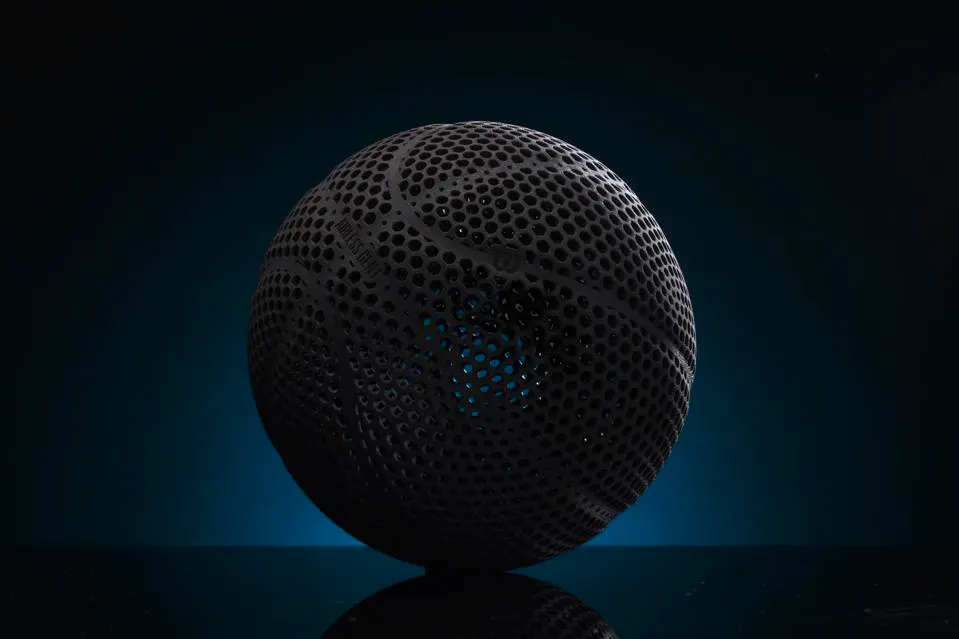
The Wilson airless basketball has captured attention as a revolutionary design, but whether it will become the future of NBA basketballs depends on several factors. Here’s an analysis:
What is the Wilson Airless Basketball?
The Wilson airless basketball is a prototype created using 3D-printing technology. Instead of being inflated, it features a lattice design that maintains its shape and bounce without the need for air. The design is aimed at eliminating issues like deflation and maintaining consistent performance.
Benefits of the Airless Basketball
- No Need for Inflation: Players and referees would no longer need to worry about checking or adjusting air pressure.
- Durability: The design could potentially outlast traditional basketballs, as it avoids wear-and-tear issues related to air bladders.
- Consistency: The ball is engineered to provide uniform bounce and performance, removing variability from over- or under-inflation.
- Sustainability: Using recyclable materials could align with environmentally conscious practices.
Challenges to Adoption
- Feel and Grip: Professional players are highly attuned to the feel of a basketball. If the airless basketball feels too different, it may face resistance.
- Sound: The lattice structure may produce a sound that’s different from traditional basketballs, which could affect the game experience.
- Cost: Manufacturing these balls could be more expensive initially, making them less accessible for widespread use.
- Testing and Tradition: The NBA and its players are accustomed to the performance and tradition of current basketballs. Extensive testing and player approval would be required for adoption.
NBA’s Stance
While the airless basketball is innovative, the NBA has not indicated plans to replace traditional basketballs. Major changes to equipment in professional sports often take years of testing, player feedback, and refinement before they are widely adopted.
Future Outlook
The Wilson airless basketball could have a place in recreational use or niche markets in the short term. If further developments address its challenges and players embrace its advantages, it might have a role in the NBA or other professional leagues in the long term. However, for now, it remains a futuristic concept rather than an immediate replacement.












Post Comment